Joshua Garrett ’23 was ready to ask out the girl of his dreams. He ran into her at a climbing competition, which felt like the perfect setting to make his move. However, his opportunity nearly fell apart as soon as it arose. “Why?” you may ask. The answer is simple: Tor the mastodon.
No, the wooly mascot did not sweep Garrett’s crush off her feet. At that time, Garrett himself donned the sweaty costume, and duty was calling.
“We were at a climbing competition, and I saw her there, but I was also late to be the mascot for the basketball game,” Garrett said.
He quickly asked her out; she said yes, and then he ran straight to the basketball game.
Garrett’s close friend Cade Rex, who graduated in 2023 with a degree in international relations, revealed that he also took on the role of the mascot, finding it worthwhile yet stressful.
“There were hilarious moments where we would try to hide Tor behind cars or squeeze him through narrow doorways to avoid being seen,” he said. “It was a great change of pace from my academics and leadership involvement.”
However, this romance-interfering mastodon was not always the costumed character mascot. In 2000, Wheaton College changed its mascot to Wheaton Thunder because the former mascot, the Wheaton Crusaders, stirred controversy over the term being “barbaric and offensive” to Jewish and Muslim communities.
Later, in 2007, some students assembled a makeshift mastodon costume using brown felt and paper towels. Their inspiration: the mastodon skeleton on the second floor of Meyer Science Center, known as Perry.
After many appearances of the makeshift mascot at soccer games and sporting events, the conversation to make the mastodon the official mascot began. Dean for Student Engagement Steve Ivester, who served as the director for student activities until 2013, was instrumental in building traction for the new mascot.
“It was a collaborative effort, but over probably four or five years, I tried to channel some student initiative and creativity,” he said. “My role often encompasses being able to bring student ideas to fruition.”
Ivester explained that the mastodon costume started to become a popular topic of discussion, with many students requesting that the mastodon become the official mascot. Although the discussion was brought to student government in 2007 and 2008, nothing was ever passed.
In 2011, four years after the first mastodon took to the fields, the student body government and Ivester worked together to develop a proposal for the mascot to become the college’s official costume, with “Thunder” to become the college’s official athletics nickname.
President Ryken and the Board of Trustees approved the proposal that spring, naming the new mascot Stertorous — “Tor” for short — meaning loud and cacophonous.

Ivester noted some confusion among students in distinguishing between the mastodon skeleton, the college’s mascot and the athletics name. He believes it is imperative that Wheaton College students clearly understand the differences between Perry, Tor and Thunder. Perry, the skeleton of a mastodon in Meyer Science Center, inspired the creation of Tor. “Thunder” is Wheaton’s athletic nickname.
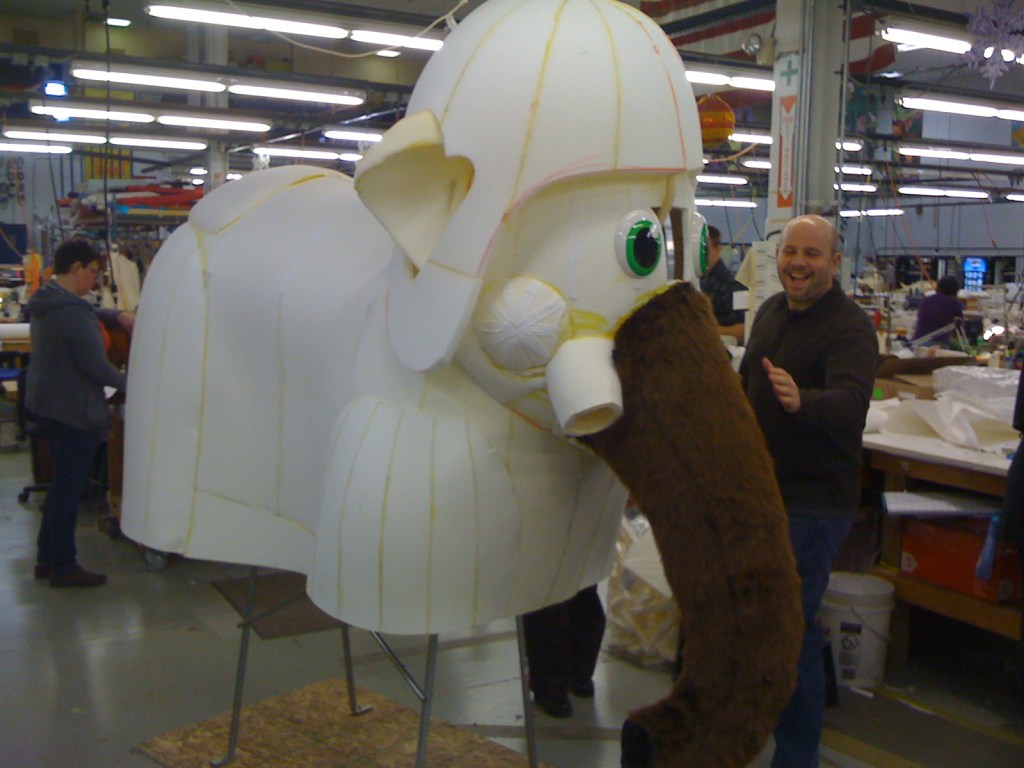
The change was publicly recognized at an event where the new costumed character mascot was unveiled. The finished Tor is the product of many hours spent designing the mascot with Ellen Morris, a local designer. Since then, Tor has entered the mascot hall of fame and is officially the largest NCAA mascot.
Ivester explained that the individuals who currently perform inside Tor are supposed to remain a secret. Students who take on the job of wearing Tor’s costume are told not to reveal their identity or role as the mascot to anyone. Ivester explained that in his role as Tor’s adviser, the decision-making process between him and those who donned the mascot costume was intentional.
“We wanted to have a team of performers, and we wanted them to help us make his personality come to life,” he said. “We don’t want the individuals to be celebrated and known so that Tor maintains a mystery and students think of him more as a fictional character as opposed to just a costume.”
As soon as the students graduate from the college, they can reveal that they wore the mascot costume.
According to Ivester, if a student felt inspired to become the individual in Tor’s costume, they would not only have to keep it a secret but also try out for auditions. These students are selected every spring through a comprehensive application and audition process overseen by Kimberley Fair, the program development coordinator in the Student Involvement Office.
Rex emphasized that choosing to be the individual behind the mascot is more than just a job, stressing that there are several reasons why the identity of the current students behind the mascot must be kept confidential.
“Tor is clearly a real mastodon, so that’s reason number one,” he joked. “Besides that, there’s a level of hype and campus lore that can only accumulate around a mascot when no one knows who’s inside. It’s more than just a costume; it’s a tradition.”