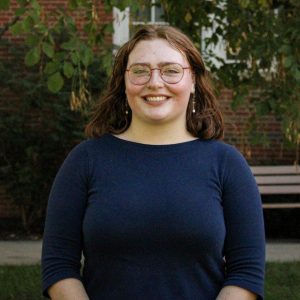
By Claire Taylor, Staff Writer
Back in 2018, David Capes, then-dean of Biblical and Theological Studies, was worried that enrollment in classic language studies was dropping. Capes wanted to do something to address his concerns, so he decided to start a podcast. He called it “Exegetically Speaking.”
The provost at the time, Margaret Diddams, liked the idea, but the title’s length and complexity made her hesitate. Capes insisted the title would work.
Turns out he was right. Seven years later, “Exegetically Speaking,” a Wheaton College and Lanier Theological Library-sponsored podcast about biblical interpretation through the study of biblical languages, is going strong. Heeding Diddams’ concerns, the first episode explained the title and its importance.
Exegesis “refers to the entire process of analyzing and interpreting the biblical text,” Wheaton Old Testament professor John Walton said in the first episode. It involves reading biblical passages in their original languages, Hebrew, Greek and Aramaic, and relating them to similar passages.
These days, “Exegetically Speaking” is a partnership podcast between Wheaton and Lanier Theological Library in Houston, Texas.
Capes moved to Houston from Wheaton in 2019 and began his position as director of Lanier Theological Library, but he remains a co-sponsor of the podcast along with Wheaton Professor Jon Laansma.
Professor of New Testament Greek and Exegesis Jon Laansma is Capes’ podcast counterpart at Wheaton. Laansma has been involved with the podcast since the beginning despite having no prior podcast experience.
At first, Capes “shouldered most of the work,” Laansma said. When Capes moved, Laansma took on a larger role in the podcast. Capes handles more of the technical aspects and interviews guests while Laansma recruits guests and writes episode descriptions.
“He’s so good at making guests feel comfortable,” Laansma said, referring to Capes.
Topics discussed have included translation differences regarding John 3:16, and how many rhetorical techniques are lost in the English translation of Amos. The podcast has featured most of Wheaton’s Bible and Theology faculty, including biblical studies professor Michael Graves and theology professor George Kalantzis. The featured guests then get to choose the topic they want to discuss. “I want it to be something that they’re familiar with,” Capes said.
Beyond the featured faculty, others both at Wheaton and Lanier also contribute to the production of the podcast in other ways. Cathy Capes, Capes’ wife and an academic assistant at Lanier, is part of the team behind “Exegetically Speaking” and serves as the audio editor.
Wheaton’s Director of Web and Graphic Design, Rebecca Larson, has also worked on the podcast since its beginning in 2018. She contributes artwork for episode covers, as well as helps with promotion and analytics.
“I didn’t have formal experience working with podcasts, but I was eager to support the effort,” Larson said. She also tracks how the podcast affects enrollment and web traffic.
While there is no direct way to see how the podcast has affected enrollment, there is evidence that the podcast has increased web traffic. “In the last 90 days, we’ve seen a 54% increase in clicks from podcast episode descriptions to the Biblical Exegesis M.A. landing page compared to the same period last year,” Larson said.
Most episodes are under 15 minutes long, as Capes did not want the podcast to overwhelm listeners who are not theologians or pastors. The next step for the podcast includes expanding to video. Starting in August, all previous and future episodes will have videos on YouTube.
Theology and Classical Languages Wheaton graduate Bram Rawlings shared what he learned from specific podcast episodes, including Graves’ interpretation of Romans 8:3. Graves emphasizes Jesus coming as a “sin offering” rather than “concerning sin.”
“It’s amazing what new interpretative options one can discover by looking at the original biblical languages,” Rawlings said.