
When Elinor Hiller told her grandparents at Christmas that she would be spending the spring semester living in Chicago, they were worried. “Make sure you have pepper spray with you everywhere you go,” they told her.
Hiller, a junior anthropology major, was not surprised by this perception of the city of Chicago. She knew there was violence on the South Side. She knew the very street she was moving to, South Cottage Grove Avenue, was in between two gang territories.
In the last few decades, Americans have reported increasingly lower perceptions of safety in cities. According to a Gallup poll in July 2023, 20 percent fewer people considered Chicago a safe place to live in or visit than in 2006. This was the largest decrease of any U.S. city.
But a month into her stay at Wheaton College’s Chicago campus, Hiller has yet to feel unsafe.
“I feel very comfortable and people are very friendly,” Hiller said of her new neighborhood. “Everyone says hi when you’re walking down the street.”
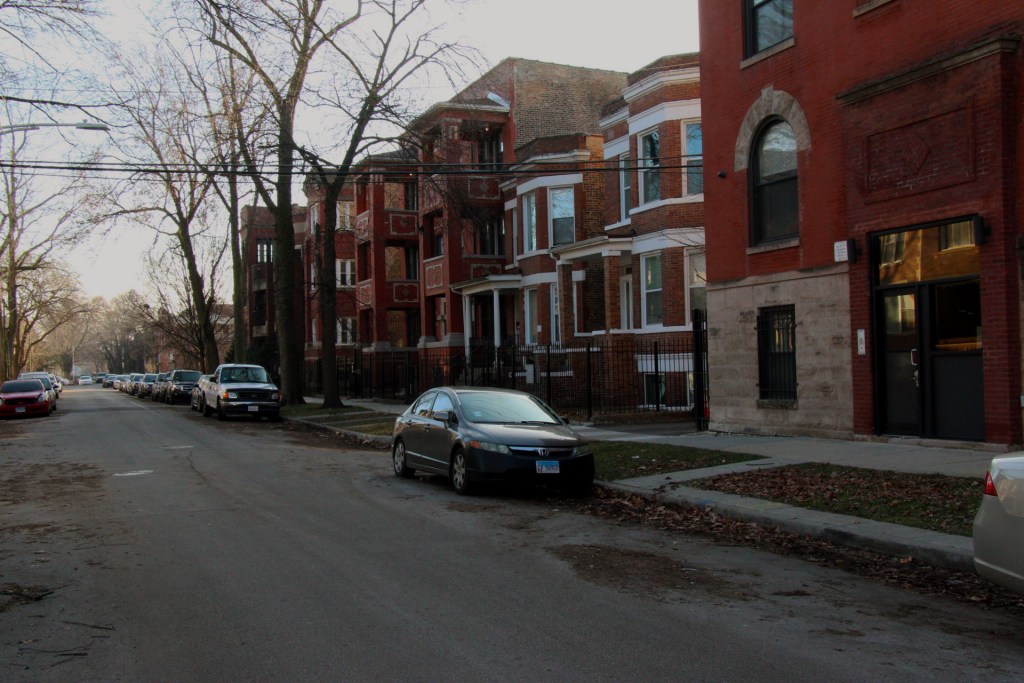
For decades, Wheaton College has kept a campus outpost in the city, about 40 minutes from its suburban main campus in Wheaton. Since its founding in 1998, the Wheaton in Chicago program has allowed undergraduate students to live, take classes and intern in an urban context. Faculty teach four courses, which cover the arts in Chicago, writing, Chicago history and theology this semester. Students taking four credits are also required to clock 160 hours in an internship by the end of the semester.
Originally, Wheaton in Chicago was stationed in Englewood, an area on the South Side just west of the I-90, until relocating to the North Side neighborhood of Uptown, roughly between Clark Street and Lake Michigan north of Irving Park Road.
In 2018, Sunshine Gospel Ministries, a Christian nonprofit organization which runs a community center and several outreach programs in Woodlawn, invited Wheaton to move its Chicago program to Sunshine Gospel’s buildings and build a unique study and work partnership. The first cohort of students went to Woodlawn, a lakeside area east of Martin Luther King Drive and roughly between 60th and 67th Streets, in fall 2018.
Gregory Lee, associate professor of theology and urban studies, is the theme coordinator for the Aequitas Urban Leadership program, which requires students to spend a semester in Chicago. Lee said that the relocation from Uptown to Woodlawn required the program’s faculty and staff to integrate more community relationships and a stronger understanding of racial and socioeconomic dynamics into the coursework and activities.
“Uptown was a gentrifying, diverse neighborhood where students would live in apartments and do internships in different parts of the city,” said Lee. “Wheaton in Chicago’s presence in Uptown didn’t really matter for the neighborhood.”

Most weeks, the cohort participates in “Woodlawn Wednesdays,” where they visit a local organization serving the community. Lee sees these trips as higher priority now. Lee also said they nudge students to find internships in the Woodlawn or broader South Side area, if possible, but the location of internships was not a consideration in Uptown.
The relocation also meant preparing students to be aware of their surroundings in Woodlawn. Crime rates in Woodlawn are generally higher than those in Uptown. According to the city of Chicago’s Violence Reduction Dashboard, Woodlawn saw 2 homicides between January 2023 and February 2024, while Uptown saw none.
During orientation, the program staff teach safety basics like staying out of people’s way on public transportation, techniques to calm down and stay alert when anxious in an area, and avoiding getting closer to what seems like a dangerous situation.
The likelihood of an incident is also lower than one might expect, Lee said. He said incidents involving students are rare, and the program staff is able to address them appropriately. Because the program has been in Woodlawn for several years, they have a good sense for how to approach student safety.
“We go most semesters without incident, and we can handle what happens,” he said. “If we saw a sudden uptick in incidents, we’d have a conversation and ask, ‘Wait a second, what’s going on, and do we need to change anything?’ We’re not in that situation.”
For students who have spent semesters in Woodlawn, safety is a consideration, but not a concern. Bradey Yarbrough, a senior political science major on the Aequitas Urban Leadership program, said he had family members who were worried about his safety as he prepared to spend the spring semester on the South Side in 2023. After hearing stories from his grandmother about a frightening experience she had on the South Side, he was wary when he first arrived. But any anxieties didn’t last long.
“It’s just going about your day like any other place,” said Yarbrough. “I really didn’t, except for like a few one-off occasions, feel unsafe in a way that those family members and friends would probably expect.”
Yarbrough acknowledged that his experience navigating the city as a tall, white male is different from that of his female classmates. But the program’s curriculum, as well as acclimating to the neighborhood, made him feel comfortable over time. Through program-sponsored visits to local organizations and churches, he observed how strong the neighborhood identity is for people in many Chicago communities, including Woodlawn.
“Being from Woodlawn is something special to the people from Woodlawn,” he said.
Aidan Duffy, a senior urban studies major, also said that as he got more familiar with the neighborhood and the city, he learned to tell the difference between feeling unsafe and feeling “out of place.” The discomfort he felt, he realized, was more from the feeling of being an outsider than an actual fear of danger.
Duffy recalled a time near the end of the fall 2023 semester when he and another student were making an inventory of vacant lots for their internship with an affordable housing project. They came upon a corner in front of a liquor store where two police cars were parked, and he could tell people were surprised to see two white students with clipboards in the area.
“I made eye contact with one of the officers in the car and I could just like see in his face, like, ‘What are you doing here?’” Duffy said. “And so there’s no words exchanged, but there’s a clashing of presence.”

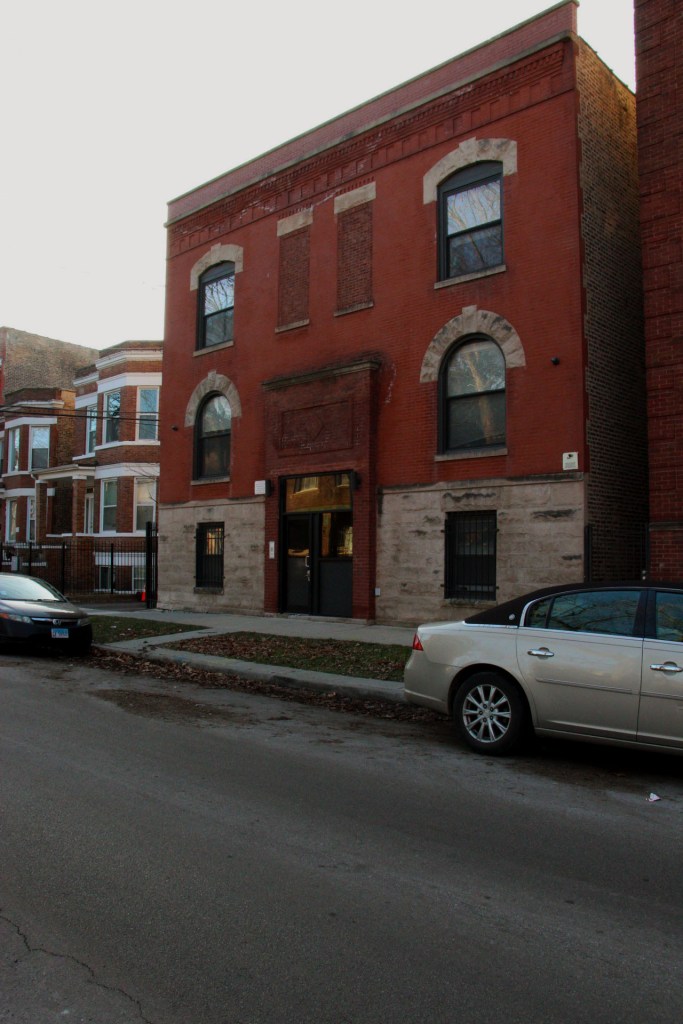
When students do experience unsettling interactions, they bring them home to discuss and learn from. Christy Vosburg, assistant director of Wheaton in Chicago, lives with her family in one of the apartments that Wheaton owns from Sunshine Gospel. Vosburg said students will sometimes mention experiences they have on public transportation or around town and she will help them process what happened.
Some students had encounters that subverted their expectations. Gabby Dowers, a junior political science major who also spent fall 2023 in Woodlawn, said she was initially shocked by how bold people could be. Once, while waiting for the bus in the pouring rain, a man, who she thought looked aloof and cold, called out to her. She didn’t know what to do.
“He had an umbrella, and he said, ‘Do you want to go under my umbrella?’” Dowers said. “And I was like, ‘Oh, okay.’ And so then I ended up standing under his umbrella for like 15 minutes, and we would take turns holding it. And we didn’t talk much.”
As the bus approached, Dowers asked the man if she should close the umbrella.
“He said, ‘I’m not closing up the umbrella until you get on the bus.’”
Immersion in the urban culture of Woodlawn and the rhythms of commuting in a city left many Wheaton in Chicago participants with the confidence that they could live comfortably in a city after college. Dowers and Alani Oyola, a senior English writing major, both said the program’s structure was more realistically aligned with what they anticipated post-grad than life on Wheaton’s main campus.
“I came away feeling like I could actually live in the city,” said Oyola, who grew up in the Austin neighborhood of Chicago. “I realized that I had the capacity to do it and it wasn’t something that I needed to be scared of. I feel a lot more sure of myself now that I’m a couple months away from graduating.”

Being plugged into the city had Christian resonance for many, including Duffy and Dowers. Dowers said when she started looking for beauty in her day-to-day life in Chicago, she saw it everywhere.
“I found beauty in Washington Park, in my neighborhood, and in the faces of the people that I would commute on the bus with like every solitary day,” she said. “In being able to see them for who they are without taking my preconceived notions of what I thought it was going to be like or how I thought they were going to interact with me.”
Duffy, too, found himself checking his own biases around town with a Christian understanding of humanity.
“Maybe I’m thrown off by someone’s appearance on the street, but they’re still an image bearer,” he said, referring to the Christian doctrine that humans are made in the image of God. “And I don’t want to dehumanize them in my own thoughts as I’m walking past them. Even if their presence may make me feel less safe, it’s just because I don’t know them.”
This week, the cohort traveled to southern California to do a comparative study of Los Angeles while staying at California State University–Los Angeles. Through the rest of the semester, Hiller is looking forward to helping Monarch Thrift Shop, where she’s interning in collaboration with Avondale Restorative Justice Center. Her classmates are eager to get more plugged into the community, seek out opportunities for hospitality and evangelism and hear from locals about their personal and community narratives.
When the students walk around during the day, they have found that the streets are quiet, stray cats roam in peace and neighbors are friendly. As for the city’s reputation, the students know it’s based in fact. But it’s not the whole story, they say.
“I would say it’s just hyperbole,” said Hiller. “It’s true to some extent, but it’s just worked up.”

Kara Grace Hess contributed reporting.

